
Best Backyard Additions for Entertaining Guests
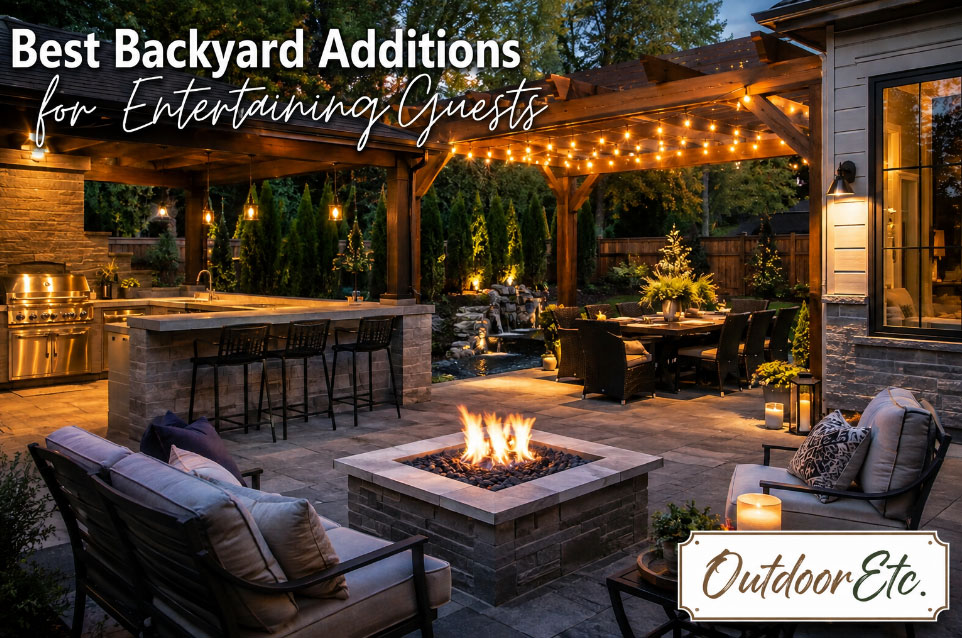
There's a particular kind of pride that comes from hosting a gathering where nobody wants to leave. It rarely happens by accident. The backyards that pull off that trick share a few things in common: they're built for movement, they're comfortable after dark, and they give guests something to do besides stand around holding a drink. Below is a practical, editorial walk-through of the additions that actually earn their keep — the ones worth the investment, the ones worth skipping, and a few that quietly do more work than their price tag suggests.
Why Backyard Entertaining Has Become Its Own Design Category
The pandemic-era shift toward outdoor living didn't fade once indoor gatherings became normal again — it settled in. Homeowners kept the fire pits, kept the outdoor speakers, and kept treating the backyard as a genuine extension of the house rather than an afterthought behind it. Real estate agents will tell you that a well-designed outdoor entertaining space now shows up in listing photos right next to the kitchen renovation. That shift in expectations is exactly why this list leans toward additions with staying power rather than trendy one-season purchases.
Fire Features That Set the Mood Without the Smoke
A fire pit is the single most reliable anchor for an outdoor gathering. It gives people a reason to sit in a circle, it solves the "what do we do once the sun goes down" problem, and it photographs beautifully for the inevitable social media post. The category has split into two camps worth knowing about.
Built-in gas fire pits are cleaner, require no tending, and can be finished to match existing stonework or decking. They're the better choice for a permanent patio centerpiece and pair naturally with sectional seating.
Portable smokeless models have become the default for renters and homeowners who want flexibility. Solo Stove built its entire brand on this idea — a double-wall airflow system that burns wood more completely and produces far less smoke than a traditional pit. The company's headquarters and flagship showroom sit at 1001 Mustang Dr, Grapevine, Texas 76051, where the brand also stages live product demonstrations for visiting dealers. For a backyard host, the appeal is simple: no permit, no installation crew, and no lingering campfire smell on everyone's jacket at the end of the night.
A Quick Note on Placement
Fire features need at least ten feet of clearance from structures, overhanging trees, and fences, and they do best on a non-combustible surface like pavers, gravel, or poured concrete rather than directly on a wood deck. Skipping this step is the most common (and most avoidable) backyard fire mistake.
An Outdoor Kitchen Worth Bragging About
Nothing keeps a host tethered to the indoor kitchen quite like having to run inside every few minutes to check on food. An outdoor kitchen — even a modest one — changes the entire rhythm of a party, because cooking becomes part of the entertainment instead of an interruption to it.
The centerpiece is almost always the grill, and two categories dominate serious backyard setups. Weber, headquartered at 1415 S Roselle Rd, Palatine, Illinois 60067, has spent over seventy years refining the kettle grill and now offers gas, charcoal, and smart electric options that suit almost any budget. For something with more theater, Big Green Egg built a cult following around its ceramic kamado cookers, which hold heat with remarkable precision for slow smoking or high-heat searing. The company's retail showroom at 3417 Lawrenceville Hwy, Tucker, Georgia 30084 is open to the public and worth a visit if you're within driving distance of Atlanta and want to see the full lineup before buying.
Beyond the grill itself, the additions that make an outdoor kitchen genuinely functional for entertaining include:
- A dedicated prep counter with weatherproof countertop material, so food doesn't have to travel back and forth from the indoor kitchen
- An under-counter beverage fridge, which does more to keep guests out of your indoor refrigerator than almost anything else on this list
- A side burner for sauces, sides, or a second protein cooking simultaneously
- Task lighting mounted above the cooking surface, since most parties run well past sunset
Decking and Flooring That Can Handle a Crowd
A great backyard addition means nothing if the surface underneath it can't handle foot traffic, spilled drinks, and the occasional dropped serving tray. This is where composite decking has largely replaced traditional wood for entertaining spaces, mainly because it doesn't warp, splinter, or need annual staining.
Trex, based at its global headquarters at 2500 Trex Way, Winchester, Virginia 22601, essentially created the modern composite decking category and remains the largest manufacturer in the space. The material is made primarily from recycled wood and plastic, which gives it a longer lifespan than pressure-treated lumber and a surface that stays cooler underfoot in direct sun — a genuinely underrated detail for a backyard that gets afternoon parties.
For hosts who don't want to commit to a full deck rebuild, large-format pavers or a poured concrete patio with a decorative aggregate finish accomplish a similar goal: a flat, stable, easy-to-clean surface that can support a full dinner party's worth of folding tables and chairs without anything wobbling.
Comfortable, Weatherproof Seating for Every Guest
Seating is the addition people underestimate the most, and it's usually the reason a gathering either flows naturally or stalls out after forty-five minutes. The goal isn't matching furniture — it's enough seating in enough configurations that guests can cluster in small groups instead of forming one stiff circle around the host.
A strong seating plan typically layers three types:
- A deep sectional or lounge set near the fire pit, built with quick-dry foam and outdoor-rated fabric so a surprise rain shower doesn't ruin an evening
- A dining table that seats at least eight, since backyard dinners tend to draw more people than indoor ones
- Mobile, lightweight seating — folding chairs, stools, or a bench — that can be pulled into whatever configuration the party actually needs that night
Materials matter more outdoors than in. Teak, HDPE resin wicker, and powder-coated aluminum all resist fading and moisture far better than untreated wood or basic plastic resin.
Shade Structures: Pergolas, Pavilions, and Umbrellas
Shade is one of those additions that only becomes obvious once you're hosting a midday event without it. A pergola with retractable canopy panels gives a backyard flexibility that a fixed roof structure can't — open on cool evenings, shaded during a bright afternoon barbecue. Louvered aluminum pergolas, which let homeowners adjust the angle of the roof slats, have become especially popular because they double as rain cover without the visual bulk of a full roofline.
For a lower-cost option, a large cantilever umbrella (10 to 13 feet in diameter) positioned over the dining table solves the same problem for a fraction of the price, and it can be repositioned or stored for winter.
Lighting That Turns Dusk into Magic
Good backyard lighting does two jobs at once: it extends the usable hours of the space, and it does most of the emotional work of making a gathering feel intentional rather than improvised.
The layering approach used by professional landscape designers translates well to a home backyard:
- String lights strung between posts or a pergola frame for overall ambient glow
- Path lighting along walkways so guests aren't navigating by phone flashlight
- Uplighting on trees or architectural features for depth and drama
- Task lighting at the bar cart, grill, and any prep surfaces
Warm white bulbs (2700K to 3000K) consistently read as more inviting than cool white, which tends to feel closer to a parking lot than a party.
Sound Systems for Ambience and Dance Floors
A backyard without music tends to feel unfinished, but a single bluetooth speaker balanced on a windowsill rarely does the job for a real gathering. Weatherproof, multi-zone outdoor speaker systems have become far more accessible in the last few years, letting a host control volume and playlists across different zones of the yard from a phone.
Sonos, headquartered at 614 Chapala St, Santa Barbara, California 93101, offers outdoor-rated speakers that integrate with its whole-home app, meaning the same system playing dinner music on the patio can shift to something louder once the dancing starts, all without anyone touching a physical dial. For hosts who want a simpler setup, a pair of portable weatherproof speakers positioned at opposite corners of the yard achieves similar stereo coverage at a fraction of the installation effort.
The Bar Cart, or Better Yet, a Built-In Bar
A dedicated bar area keeps guests circulating instead of clustering around the kitchen island, and it signals — more than almost any other addition — that the backyard was designed with hosting in mind. A wet bar with a small sink and built-in ice bin is the upper end of this category, but a well-stocked rolling bar cart accomplishes ninety percent of the same function for a much smaller investment.
Whichever route you take, the addition that quietly matters most is proper cold storage. YETI, whose flagship retail store sits at 220 S Congress Ave, Austin, Texas 78704, built its reputation on rotomolded coolers that hold ice for days rather than hours — a genuinely practical upgrade for anyone hosting an all-afternoon event where the beverage station can't be refilled every hour.
Water Features and Pools for the Ultimate Splash
Not every backyard has the footprint or budget for a full pool, but water in some form remains one of the most requested additions among homeowners who entertain regularly. The options scale nicely:
- A plunge pool or spool (a hybrid spa/pool under 15 feet long) fits in surprisingly small yards and provides a cooling option on hot-weather party days
- A hot tub or spa extends entertaining into cooler months and tends to become the social gathering point of any late-evening party
- A simple fountain or bubbling urn adds ambient sound without the maintenance commitment of a pool, which matters for hosts who want atmosphere without a second full-time home system to manage
Games and Activities to Keep Guests Entertained
Every great party eventually needs something for people to do with their hands besides hold a plate. Lawn games solve this cheaply and reliably, and they tend to be what guests remember most fondly afterward.
Cornhole, bocce ball, and giant Jenga are the reliable standbys because they're easy to learn mid-party and don't require a rulebook explanation. For a more permanent addition, a regulation-sized horseshoe pit or a built-in putting green gives repeat guests something to look forward to on future visits. Outdoor ping pong tables and shuffleboard courts occupy a step up in both price and permanence, but they're worth it for hosts who entertain frequently enough to justify the space.
Storage and Organization Behind the Scenes
The additions guests never notice are often the ones that make a party run smoothly. A weatherproof deck box or outdoor storage cabinet keeps cushions dry, games organized, and extra tableware within reach without cluttering the entertaining space itself. For hosts running a full outdoor kitchen, a dedicated storage cabinet near the grill for tools, sauces, and extra propane tanks saves the mid-cookout scramble back into the house.
Practical Extras: Heaters, Bug Control, and Restroom Access
A few smaller additions punch well above their cost:
- Patio heaters (propane or electric) extend the entertaining season by a full month or two on either side of summer
- In-ground misting systems or citronella diffusers cut down on bugs without the harsh smell of aerosol spray
- A pathway lighting-and-signage system directing guests to an accessible restroom keeps larger parties from turning into a line outside the one bathroom nearest the door
Frequently Asked Questions
What's the single best backyard addition for entertaining on a limited budget?
A quality portable fire pit paired with warm string lighting delivers the most noticeable impact per dollar spent. Both additions are relatively inexpensive, require no permits, and immediately give a backyard a gathering point after dark.
How much should I budget for a full backyard entertaining upgrade?
Costs vary enormously by scope. A lighting and fire pit refresh can run under $1,500, a mid-range outdoor kitchen typically falls between $10,000 and $30,000, and a full renovation including decking, a pergola, and a built-in bar can exceed $50,000. Most professional landscape designers recommend phasing additions over a few seasons rather than building everything at once.
Do I need a permit for a fire pit or outdoor kitchen?
Often, yes, particularly for built-in gas fire features and any structure with plumbing or a permanent gas line. Portable fire pits and freestanding grills typically don't require permits, but local fire codes vary significantly, so checking with a municipal building office before installation is worth the extra step.
What's the most overlooked backyard addition for hosting?
Seating flexibility. Homeowners tend to invest heavily in a single anchor feature — a fire pit or an outdoor kitchen — and then under-plan for the actual number of people who need somewhere comfortable to sit. Mixing fixed and mobile seating solves this without a major redesign.
How do I make a small backyard feel entertaining-ready?
Vertical elements do the heavy lifting in compact spaces. A pergola with string lighting, a narrow bar cart instead of a full wet bar, and a small plunge pool or fountain instead of a full pool all deliver the entertaining effect of a larger yard without requiring the square footage.
Bringing It All Together
The backyards that leave guests reluctant to head home rarely rely on one showstopping feature. They layer a handful of well-chosen additions — fire, food, seating, sound, and light — into a space that works for a quiet dinner for six and a loud party for thirty with equal ease. Start with whichever addition solves your biggest current gap, whether that's a lack of seating, a dead patch of yard after sunset, or a kitchen that keeps pulling the host back indoors. The rest tends to follow naturally once the backyard starts earning its reputation as the place everyone wants to be.